How We Handle Mold in Wylie, Texas
Fire & Water Restoration Plus does not test for mold or perform mold abatement ourselves. We manage it. Texas regulates mold work closely: assessment, protocol writing and remediation must be performed by licensed professionals, and the assessor and the remediator on a project must be independent of each other. We subcontract all mold testing, protocol creation and abatement to licensed partners, and we oversee that work as a specialized general contractor with more than 30 years in the restoration industry.
That structure protects you. You get an independent, licensed assessment of what is actually there, a licensed remediation contractor performing the removal under a written protocol, and one accountable general contractor coordinating both, correcting the moisture problem that caused the mold, and rebuilding when the space is cleared.
What We Do on a Mold Project
Mold is a moisture problem first. Our own crews handle the part of a mold project that is restoration work, and we coordinate licensed specialists for the rest.
- Find and stop the water. Most mold in North Texas homes traces back to a plumbing leak, roof leak, HVAC condensation or a past water loss that was never fully dried. Our technicians locate the source with moisture meters and thermal imaging and correct it.
- Mitigate active water damage. Where the loss is recent, we extract water and dry the structure to IICRC S500 standards so the conditions that allow mold to spread are removed.
- Bring in a licensed mold assessment consultant. The assessor inspects, samples where appropriate, and writes the remediation protocol that defines the work area, containment, methods and clearance criteria.
- Coordinate a licensed mold remediation contractor. The remediator sets containment and negative air, removes affected materials, cleans and treats the work area, and runs HEPA air filtration, following the written protocol and the IICRC S520 standard.
- Supervise to clearance. We schedule and oversee the work, keep you informed, and coordinate the post-remediation assessment. Texas requires a passed clearance and a Certificate of Mold Damage Remediation for regulated projects, and we make sure that paperwork reaches you.
- Rebuild. Once the space is cleared, our crews replace drywall, insulation, trim, cabinetry and flooring and return the room to pre-loss condition, or better if you choose to remodel.
Black Mold and Other Molds
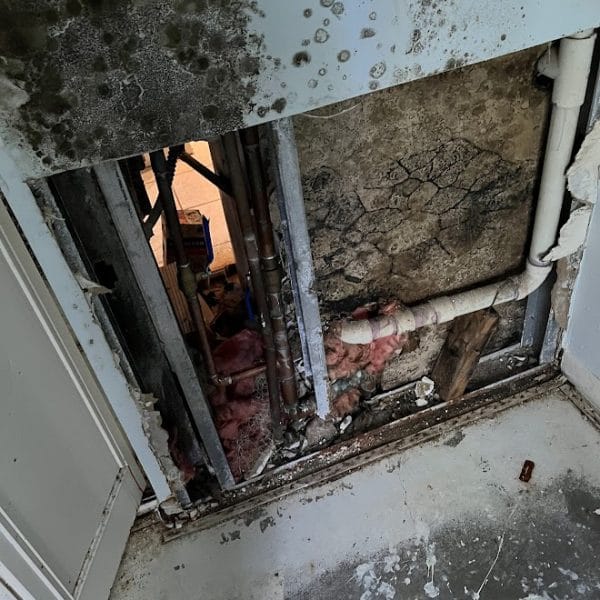
“Black mold” usually refers to Stachybotrys, but many molds are dark, and color alone does not tell you what species is present or how much of a health concern it poses. That is exactly why Texas requires an independent, licensed assessor: sampling and lab analysis, not guesswork, determine what is there and what protocol is appropriate. Whatever the species, the response is the same in principle: stop the moisture, contain the area, remove affected porous materials, clean and treat the remainder, and verify the result.
If you or a family member has allergy or respiratory symptoms that seem tied to being in the home, tell us when you call. It affects how quickly containment needs to go up and whether the assessor recommends air sampling.
Why Not Handle Mold Yourself?
Small surface growth on a non-porous surface can often be cleaned by a homeowner. Anything larger, anything inside walls or under flooring, or anything connected to a water loss should be assessed by a licensed professional. In Texas, mold remediation of more than 25 contiguous square feet must be performed by a licensed remediation contractor. Disturbing mold without containment spreads spores through the house, and over-the-counter treatments leave the moisture problem in place, so the growth returns.
Homeowners, real estate agents and property managers rely on us to manage this process end to end because they get one point of contact, licensed specialists doing the regulated work, and a rebuild crew that already knows the project.
Mold and Your Insurance Claim
Mold coverage varies widely between policies. Many carriers cover mold that results from a sudden, covered water loss and exclude mold from long-term leaks or deferred maintenance, often with a separate mold sublimit. We document the moisture source, the water mitigation and the remediation scope so your adjuster has a complete record, and the licensed assessor’s report gives the claim an independent basis. Coverage decisions rest with your carrier, and we recommend reviewing your policy with your agent early in the process.
Get Started
If you see or smell mold, or you have had a water loss and are worried about what is behind the walls, call us. We will look at the moisture situation, explain how the assessment and remediation process works in Texas, and coordinate the licensed partners your project needs. Our emergency line is answered 24 hours a day.